Responsible AI
Principles and practices for Responsible AI—ethics, fairness, transparency, privacy, safety, and governance—to design, evaluate, deploy, and monitor trustworthy ML systems in real-world products.
Responsible AI
Build and ship AI systems that earn trust. This group explores principles and hands-on practices to make models fair, transparent, privacy-preserving, safe, and governed across the ML lifecycle.
Why it matters
Responsible AI reduces harm, manages risk, improves user outcomes, and keeps teams aligned with policy and regulation while accelerating sustainable innovation.
What you will learn
- Frame AI risks with NIST AI RMF and map controls to your ML lifecycle
- Measure and mitigate bias using fairness metrics and data interventions
- Increase transparency with model cards and datasheets for datasets
- Apply interpretability methods such as SHAP and counterfactuals
- Build privacy by design with data minimization and differential privacy
- Red team models and implement safety safeguards for LLMs and classifiers
- Operationalize governance, documentation, and sign-offs
- Monitor post-deployment and run incident response playbooks
Who it is for
- ML engineers and data scientists
- Product and UX for AI features
- Privacy, security, and risk teams
- Engineering managers and tech leads
Learning path
- Responsible AI 101: Principles, tradeoffs, and threat modeling
- Mapping NIST AI RMF to your ML lifecycle
- Data governance: consent, provenance, and datasheets
- Measuring fairness: metrics, pitfalls, and mitigation
- Transparency: model cards, interpretability, and audits
- Privacy by design: minimization, anonymization, differential privacy
- Safety and red teaming for LLMs and traditional ML
- Monitoring, incident response, and continuous compliance
- Building an RAI review process and documentation stack
- Case studies: patterns that work in production
Topics map
flowchart LR
        A[Responsible AI] --> B[Principles]
        B --> B1[Ethics]
        B --> B2[Fairness]
        B --> B3[Transparency]
        B --> B4[Privacy]
        B --> B5[Safety]
        B --> B6[Accountability]
        A --> C[Practices]
        C --> C1[Data Governance]
        C --> C2[Evaluation]
        C --> C3[Explainability]
        C --> C4[Monitoring]
        C --> C5[Documentation]
        C --> C6[Governance]
Toolkit and templates
- Risk registers aligned to NIST AI RMF and ISO IEC 23894
- Model cards, system cards, and dataset documentation templates
- Fairness evaluation notebooks and bias mitigation checklists
- Privacy threat modeling and data retention policies
- Red teaming guides and safety evaluation rubrics
- Monitoring dashboards with alerts and incident forms
Prerequisites
- Basic ML and model evaluation
- Familiarity with Python notebooks
- Intro knowledge of data privacy concepts
Outcomes
By the end, you can embed RAI controls into delivery, justify tradeoffs, document decisions, and run audits that stand up to product, user, and regulatory scrutiny.
Editorial standards
- Evidence based and reproducible
- Clear tradeoffs and limitations
- Language accessible to cross-functional teams
- Code and checklists ready for production handoff
Featured lesson

Understanding Ethical AI: A Framework for Developers
Explore the ethical considerations and frameworks that developers need to integrate into AI projects to ensure fairness and transparency.
Course curriculum
Lessons
Understanding Ethical AI: A Framework for Developers
Explore the ethical considerations and frameworks that developers need to integrate into AI projects to ensure fairness and transparency.
Read →
Fairness in AI: Strategies for Bias Mitigation
Learn effective strategies to identify and mitigate biases in AI systems.
The Importance of Transparency in AI Decision-Making
Discuss the need for transparency in AI systems and its implications.
Privacy Considerations in Responsible AI Design
Examine how to incorporate privacy into AI system design for user trust.
Governance of AI: Building Trustworthy Systems
Explore best practices for governing AI to ensure accountability and trust.
Monitoring AI Ethics Post-Deployment
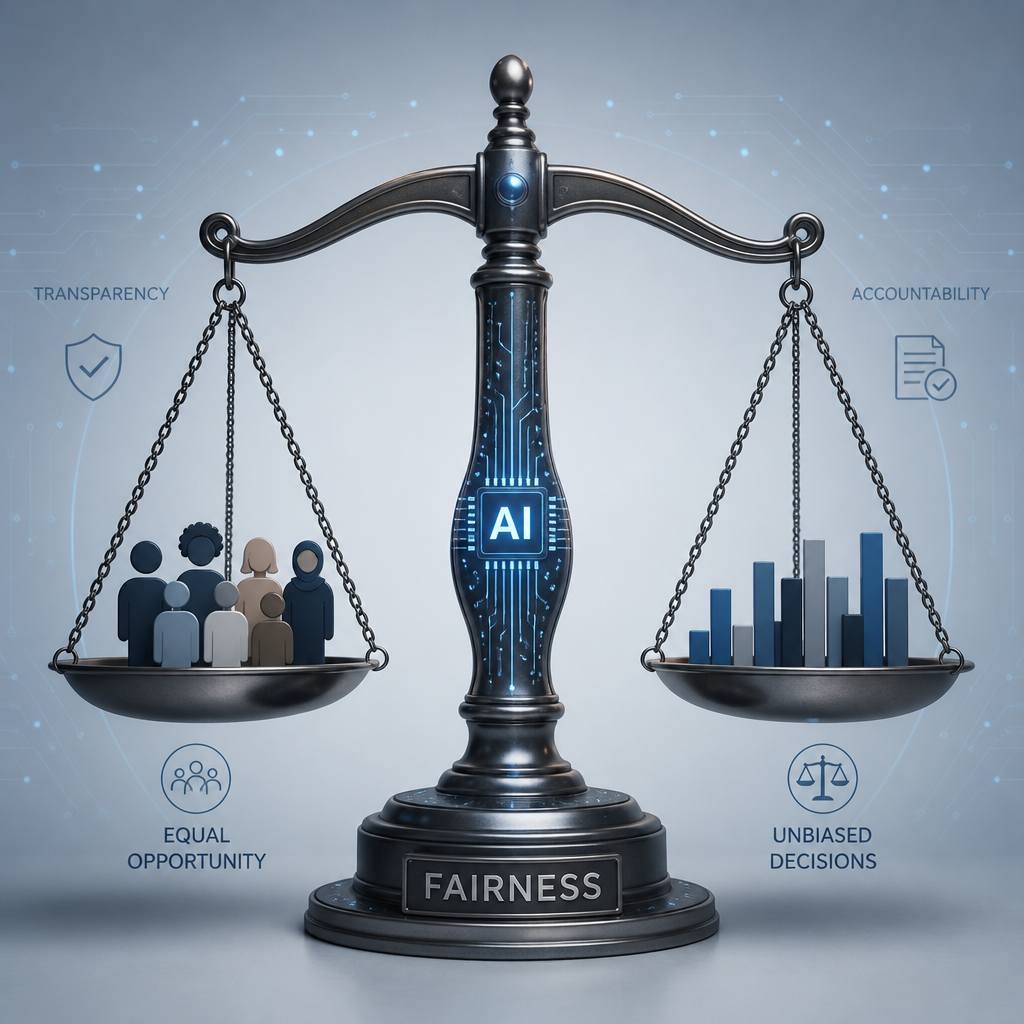
Exploring the practices and challenges of monitoring the ethical impact of AI systems post-deployment, ensuring fairness and accountability.
Read →

Safety in AI: Ensuring Reliability and Security
Explore the critical aspects of AI safety, emphasizing how reliability and security are essential for robust AI systems. This article delves into best practices and cutting-edge techniques to safeguard AI applications, ensuring they function as intended and protect sensitive data from malicious threats.
Read →