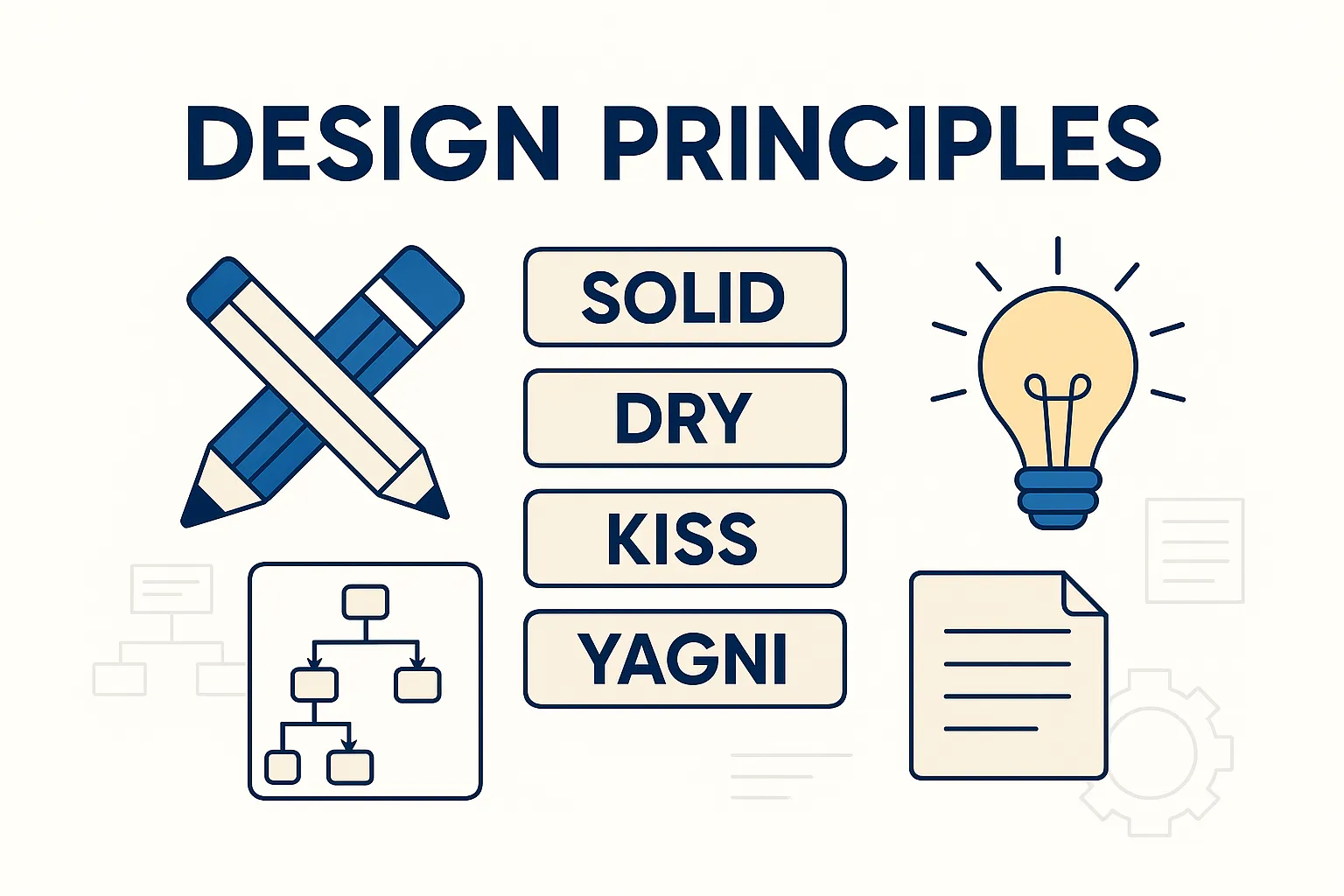
Design Principles
Explore essential software design principles that guide developers in creating robust, maintainable, and scalable applications. This series covers SOLID, DRY, KISS, YAGNI, and other foundational concepts with practical examples and actionable insights.
Featured lesson
Design Principles 101 – Writing Code That Stands the Test of Time
Master foundational design principles like SOLID, DRY, and KISS to build scalable and maintainable software. Includes real-world examples in C# and Python.
Course curriculum
Lessons
Design Principles 101 – Writing Code That Stands the Test of Time
Master foundational design principles like SOLID, DRY, and KISS to build scalable and maintainable software. Includes real-world examples in C# and Python.
Read →
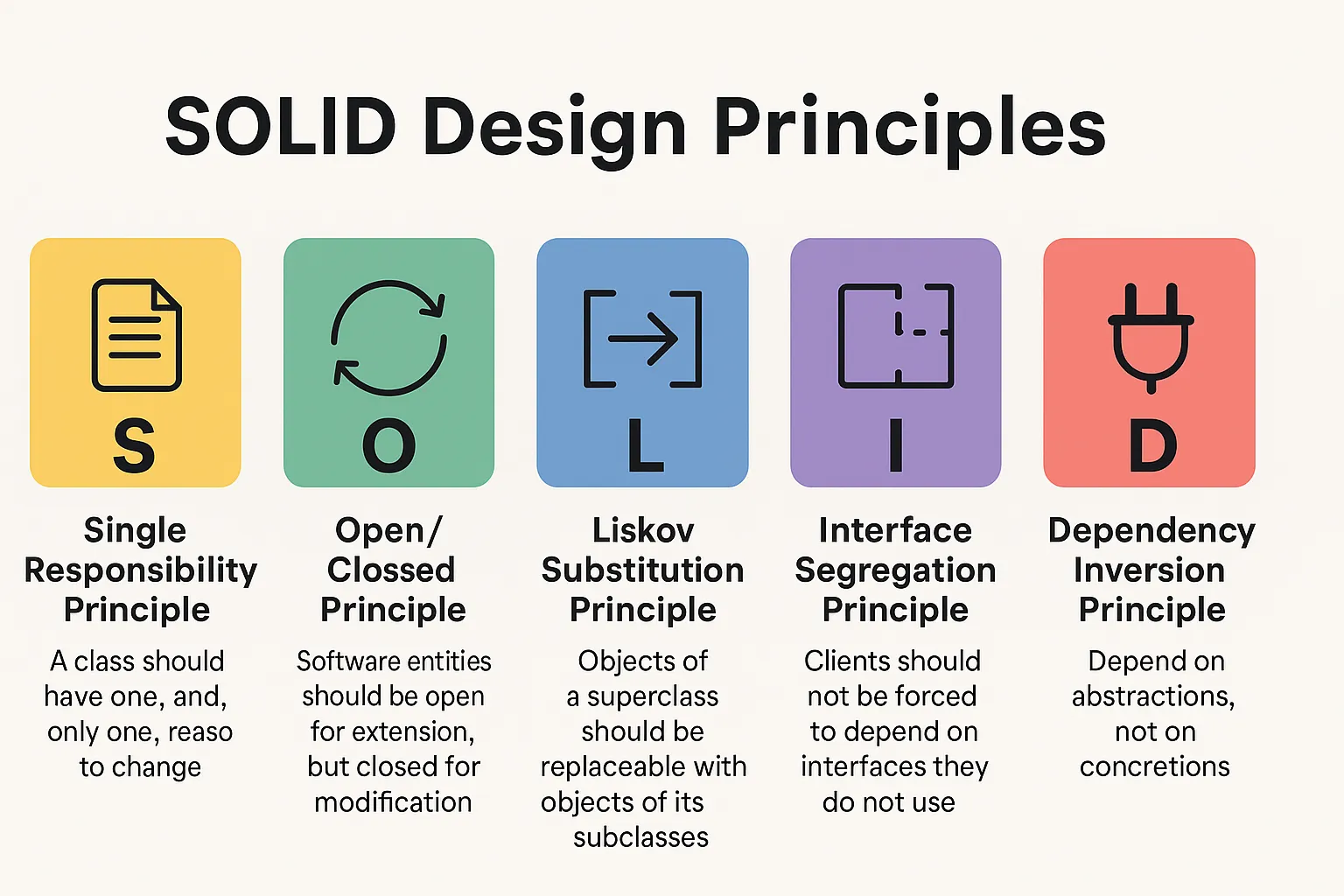
SOLID Principles – The Foundation of Object-Oriented Design
Dive deep into the SOLID principles to write clean, maintainable, and scalable code. Includes C# and Python examples, UML diagrams, and real-world applications.
Read →
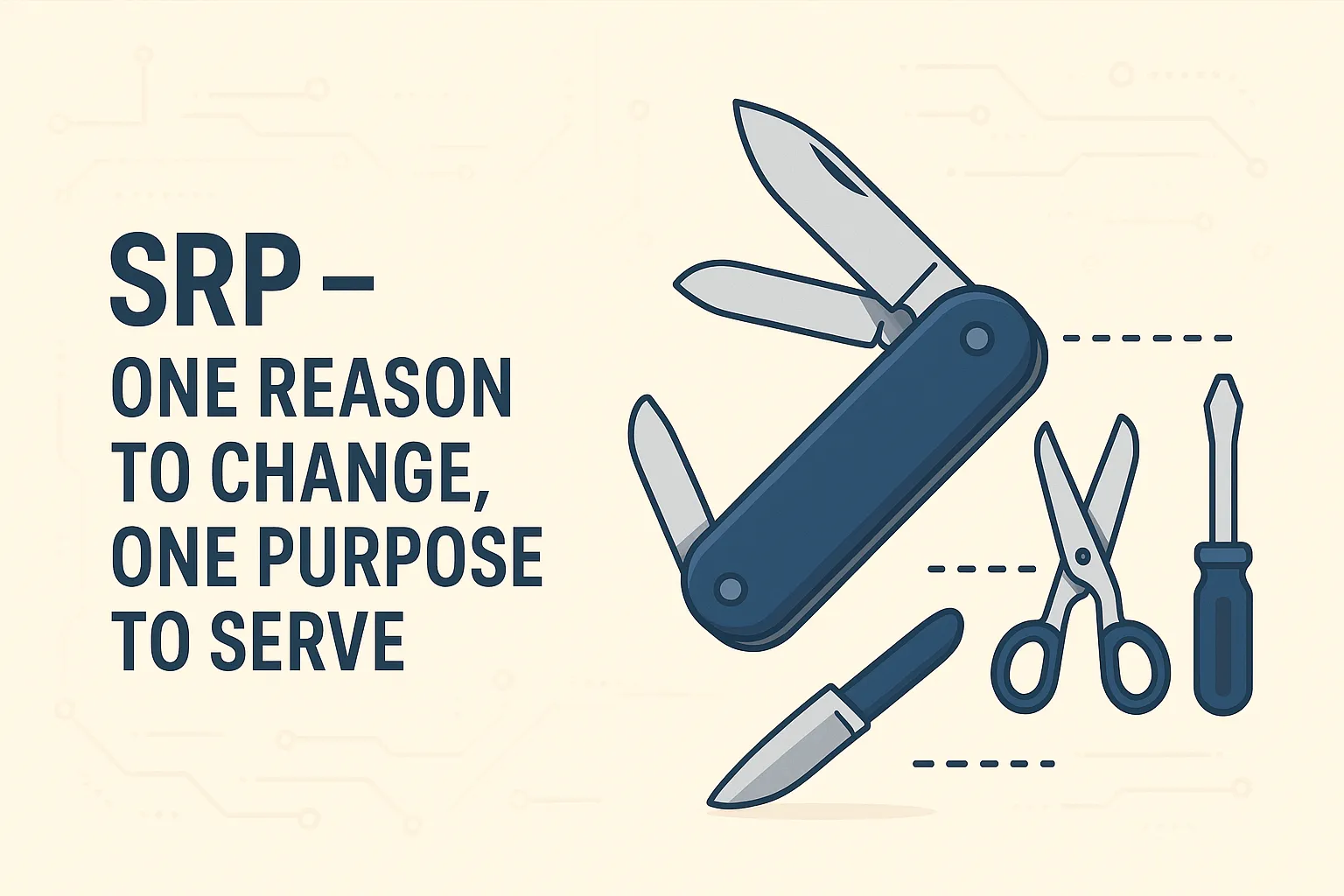
Single Responsibility Principle - One Reason to Change, One Purpose to Serve
Understand the Single Responsibility Principle (SRP) and how it helps in writing maintainable and scalable code. Includes examples in C# and Python.
Read →
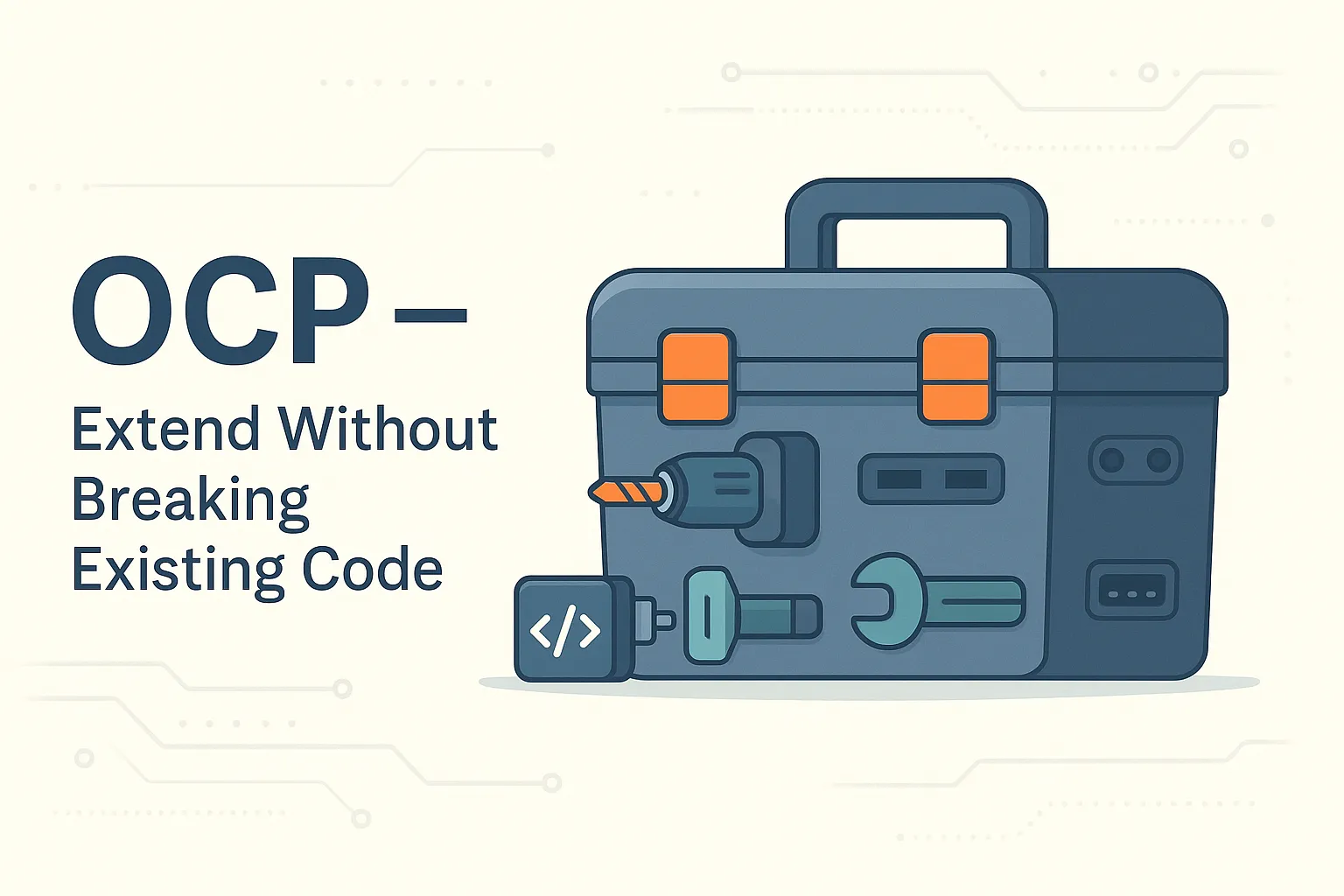
Open-Closed Principle - Extend Without Breaking Existing Code
Master the Open-Closed Principle (OCP) and learn how to build software that is open for extension but closed for modification. Includes real-world examples in C#, Python, Java, and JavaScript with practical implementation patterns.
Read →
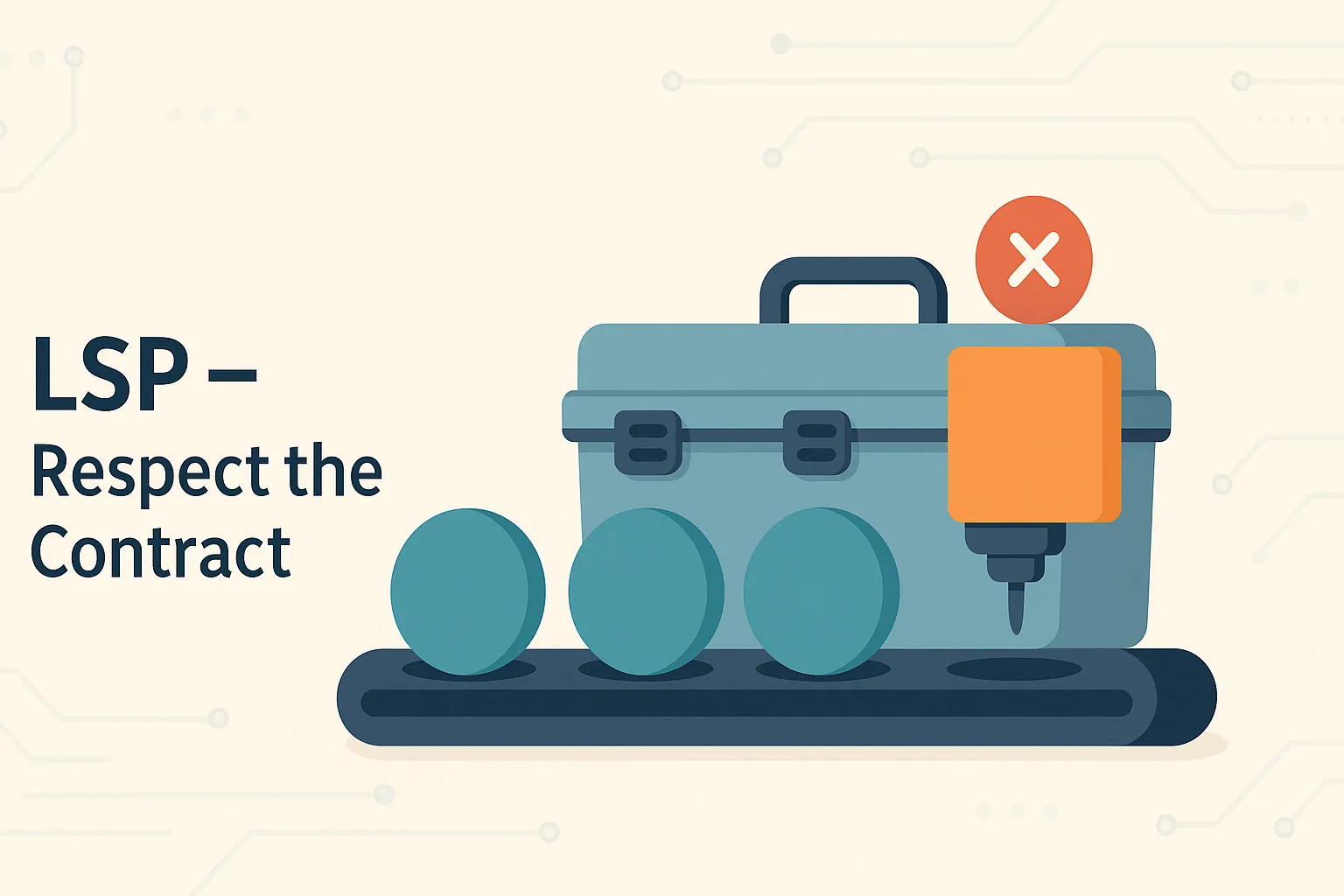
Liskov Substitution Principle - Building Reliable Inheritance Hierarchies
Master the Liskov Substitution Principle (LSP) and learn how to design inheritance hierarchies where subclasses can seamlessly replace their parent classes. Includes comprehensive examples in C#, Python, Java, and JavaScript with real-world scenarios and implementation guidelines.
Read →

Interface Segregation Principle - Design Focused, Client-Specific Interfaces
Master the Interface Segregation Principle (ISP) and learn how to design focused, client-specific interfaces that prevent unnecessary dependencies. Includes comprehensive examples in C#, Python, Java, and JavaScript with real-world scenarios and progressive interface composition patterns.
Read →
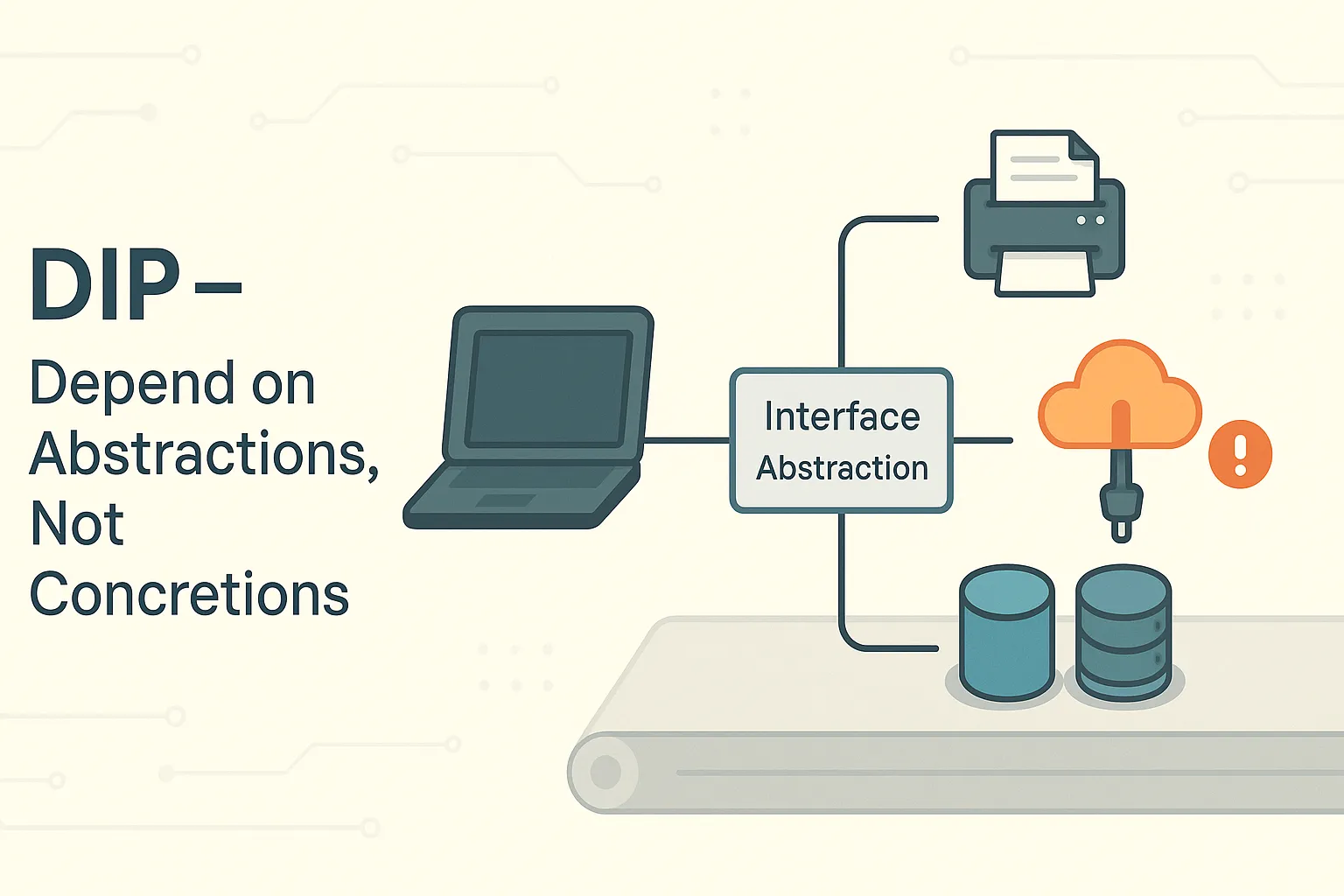
Dependency Inversion Principle - Building Flexible, Testable Architectures
Master the Dependency Inversion Principle (DIP) and learn how to build flexible, testable architectures through dependency injection and inversion of control. Includes comprehensive examples in C#, Python, and JavaScript with enterprise patterns and testing strategies.
Read →
Quizzes in this series
SOLID – Single Responsibility Principle Quiz
Test your understanding of the Single Responsibility Principle (SRP). Learn to identify God classes, focused design, and when to split responsibilities.
SOLID – Open/Closed Principle Quiz
Challenge yourself with questions on the Open/Closed Principle (OCP). Understand how to extend systems without modifying core logic.
SOLID – Liskov Substitution Principle Quiz
Evaluate your grasp of the Liskov Substitution Principle (LSP). Spot violations in inheritance and ensure substitutability in your code.
SOLID – Interface Segregation Principle Quiz
Check your knowledge of the Interface Segregation Principle (ISP). Avoid fat interfaces and design client-specific contracts.
SOLID – Dependency Inversion Principle Quiz
Master the Dependency Inversion Principle (DIP). Learn to depend on abstractions, improve testability, and decouple modules.
SOLID – Code Snippet Challenge Quiz
Identify design issues and justify the correct SOLID principle with real C# and Python code snippets. A practical quiz for hands-on developers.