Demystifying Generative AI for Developers
Demystifying Generative AI for Developers breaks down complex GenAI concepts into practical, understandable engineering knowledge. Instead of hype, this series focuses on clarity. Instead of magic, it explains systems. From prompts and embeddings to RAG systems, vector databases, AI orchestration, hallucination control, multi-agent workflows, and production-ready AI architectures — this series is built for developers who want to understand and build real AI-powered systems.

Featured lesson
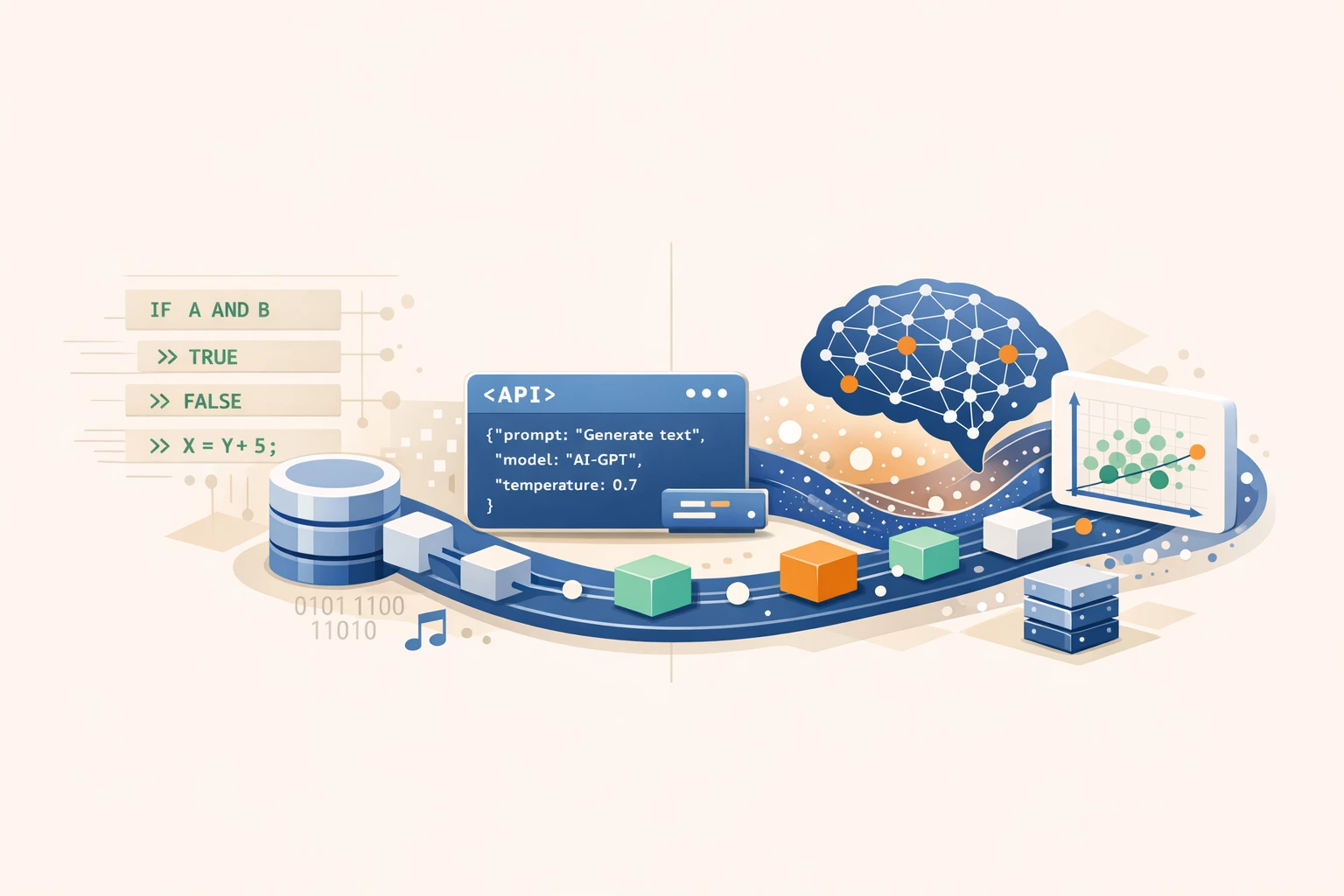
Foundations: What Exactly Is Generative AI?
Why generative AI behaves differently from deterministic software: sampling, temperature and the deterministic shell you need around it, plus the architecture decisions that follow.
Course curriculum
Generative AI & LLM Foundations
Foundations: What Exactly Is Generative AI?
Why generative AI behaves differently from deterministic software: sampling, temperature and the deterministic shell you need around it, plus the architecture decisions that follow.
Read →

LLMs Explained Simply
What an LLM really is: a next-token predictor. Where memory, latency and cost come from, how to choose between small and large models, and how to architect around it.
Read →
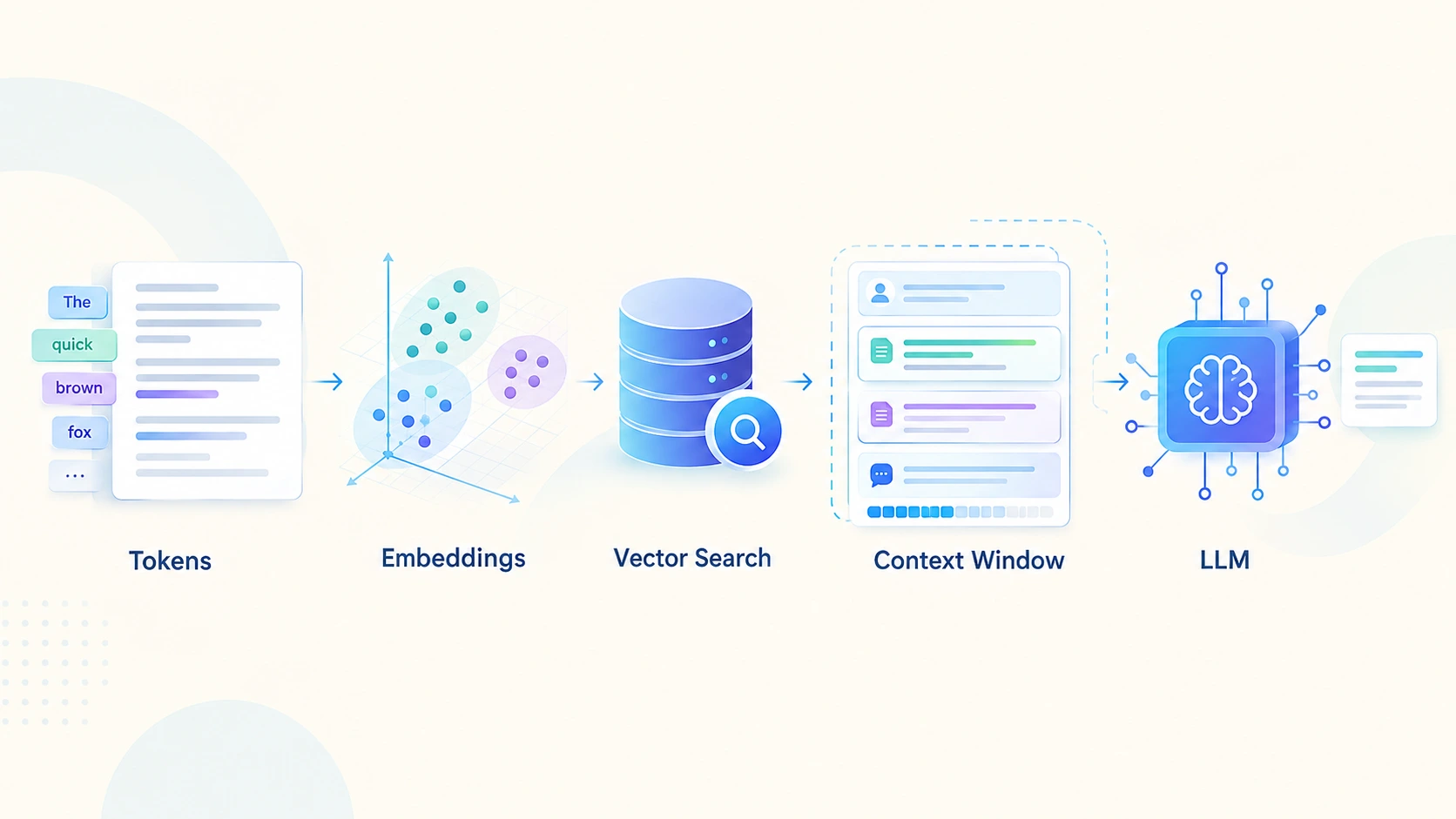
Tokens, Embeddings, and Context Windows
Tokens, embeddings and context windows for developers: what each is, how they shape cost and retrieval quality, and the architecture decisions that follow.
Read →
How Transformers Actually Work
A developer-friendly look inside transformers: attention, layers and the KV cache, and what they mean for context budgets, latency and prompt design.
Read →
Why LLMs Hallucinate
Why LLMs state falsehoods with confidence, how to reduce it with grounding, evidence checks and abstention, and what it means for architecture: risk tiers, trust boundaries and acceptance criteria.
Read →
Minimizing Tokens in AI Models: Techniques and Best Practices
Cut LLM token costs and latency: measure usage, budget each part of the request, trim context, history, prompts and output, and gate every saving on quality.
Read →
Prompt Engineering & LLM Interaction
Mastering Prompt Engineering: Transforming AI Responses for Developers
Prompt engineering for developers: write prompts as specifications, separate instructions from data, test them like code and manage them as versioned components.
Read →
Tool Use and Function Calling
How LLMs call your code: the tool-call loop, validating arguments, designing safe tools, and least-privilege architecture.
Read →
RAG & Knowledge Retrieval
Vector Search and Vector Databases
How vector search really works: approximate indexes, permission filters, hybrid search and reranking, and the architecture decisions behind a retrieval layer.
Read →
Retrieval-Augmented Generation (RAG) Explained
RAG explained for developers: the pipeline, where it fails, and how to make answers grounded, cited and owned.
Read →
RAG vs Fine-Tuning vs Prompting
Prompting, RAG or fine-tuning? What each one changes, when each pays off, and a decision ladder for architects.
Read →
AI Agents & Intelligent Workflows
Enterprise AI Architecture
Evaluating LLM Systems
How to test GenAI: golden sets, retrieval metrics, LLM judges and release gates that stop quality regressions.
Read →
Production Architecture for GenAI Systems
A reference architecture for production GenAI: gateways, guards, verification, observability, fallbacks and governance.
Read →