
Template Method Pattern – Define the Algorithm Skeleton
Template Method Pattern
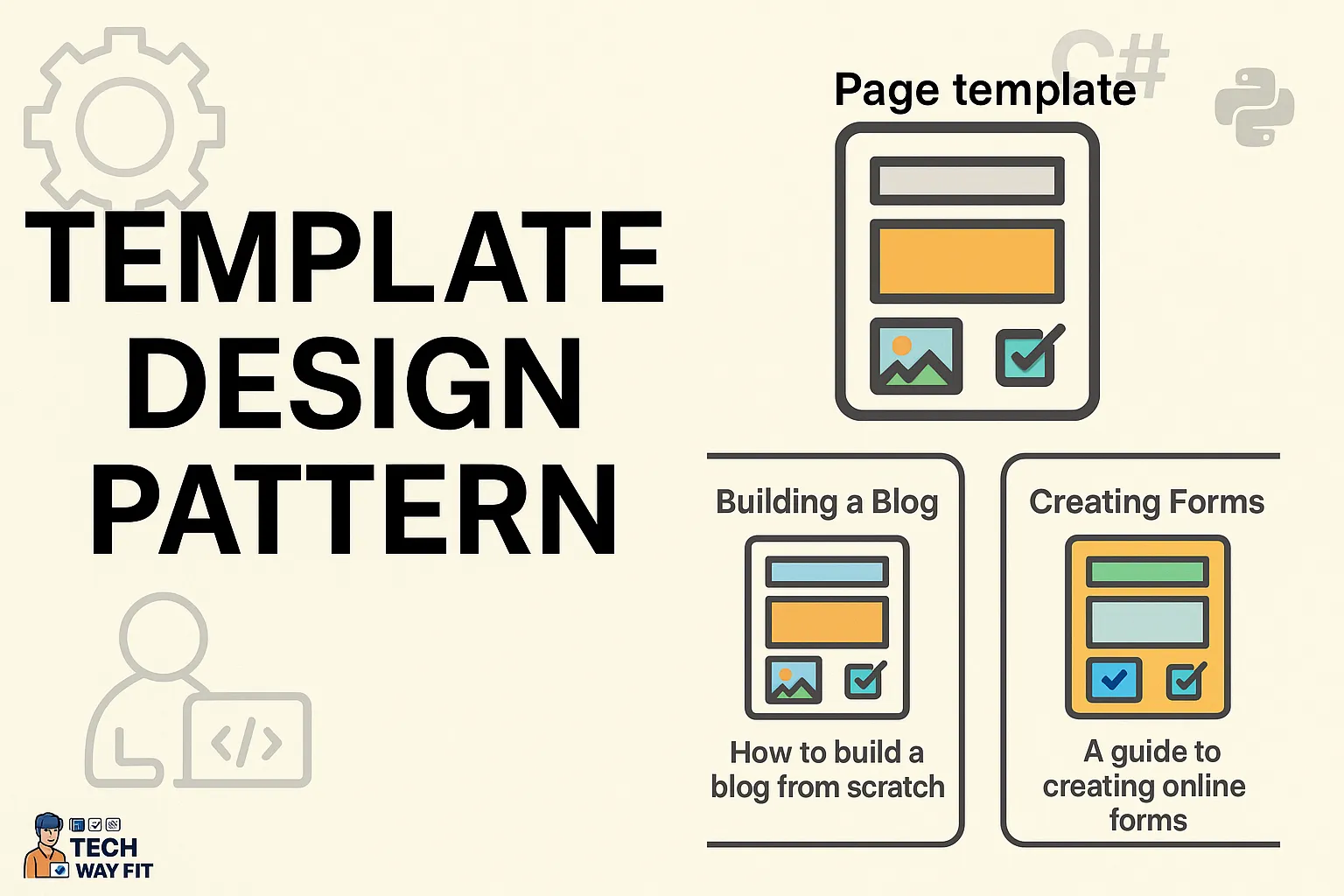
The Template Method Pattern is a behavioral design pattern that defines the skeleton of an algorithm in a base method, allowing certain steps to be implemented or customized by subclasses. This approach promotes code reuse, enforces a consistent process, and enables flexibility by letting subclasses override specific steps without altering the overall algorithm structure.
Real-World Analogy
Think of making tea or coffee. The general process is the same: boil water, brew the beverage, pour into a cup, and optionally add condiments. The steps are consistent, but the implementation of "brew beverage" differs.
Pattern Structure
                      classDiagram
                        class AbstractClass {
                          +TemplateMethod()
                          +BaseOperation1()
                          +BaseOperation2()
                          #RequiredOperation1()
                          #RequiredOperation2()
                          +Hook()
                        }
                        class ConcreteClass {
                          +RequiredOperation1()
                          +RequiredOperation2()
                        }
                        AbstractClass <|-- ConcreteClass
💻 Code Example
The following example demonstrates the Template Method pattern using a Beverage preparation scenario.
                      abstract class CaffeineBeverage {
                          public void PrepareRecipe() {
                              BoilWater();
                              Brew();
                              PourInCup();
                              AddCondiments();
                          }

                          void BoilWater() => Console.WriteLine("Boiling water");
                          void PourInCup() => Console.WriteLine("Pouring into cup");

                          public abstract void Brew();
                          public abstract void AddCondiments();
                      }

                      class Tea : CaffeineBeverage {
                          public override void Brew() => Console.WriteLine("Steeping the tea");
                          public override void AddCondiments() => Console.WriteLine("Adding lemon");
                      }
                      from abc import ABC, abstractmethod

                      class CaffeineBeverage(ABC):
                          def prepare_recipe(self):
                              self.boil_water()
                              self.brew()
                              self.pour_in_cup()
                              self.add_condiments()

                          def boil_water(self):
                              print("Boiling water")

                          def pour_in_cup(self):
                              print("Pouring into cup")

                          @abstractmethod
                          def brew(self): pass

                          @abstractmethod
                          def add_condiments(self): pass

                      class Tea(CaffeineBeverage):
                          def brew(self):
                              print("Steeping the tea")
                          def add_condiments(self):
                              print("Adding lemon")
Key Points
| Component | Description |
|---|---|
| Template Method | Defines the steps of the algorithm |
| Concrete Class | Implements abstract methods for specific steps |
| Hook (optional) | Provides a default method which can be overridden |
When to Use
-
When multiple classes share the same algorithm structure.
Example:// Base class defines the template abstract class ReportGenerator { public void Generate() { FetchData(); FormatData(); PrintReport(); } protected abstract void FetchData(); protected abstract void FormatData(); protected virtual void PrintReport() => Console.WriteLine("Printing report..."); } // Subclass customizes steps class SalesReport : ReportGenerator { protected override void FetchData() => Console.WriteLine("Fetching sales data"); protected override void FormatData() => Console.WriteLine("Formatting sales data"); } -
To prevent code duplication by reusing base logic.
Example:class DataProcessor(ABC): def process(self): self.load() self.transform() self.save() @abstractmethod def load(self): pass @abstractmethod def transform(self): pass def save(self): print("Saving data") class CsvProcessor(DataProcessor): def load(self): print("Loading CSV") def transform(self): print("Transforming CSV") -
To enforce an invariant algorithm structure across implementations.
Example:abstract class Game { public void Play() { Start(); while (!IsOver()) { TakeTurn(); } End(); } protected abstract void Start(); protected abstract bool IsOver(); protected abstract void TakeTurn(); protected abstract void End(); }
Advantages and Disadvantages
| Pros | Cons |
|---|---|
| Code reuse via base algorithm | Can lead to tight coupling with base class |
| Improves consistency | Inflexible structure if too rigid |
🧠 Quiz
🔚 Conclusion
The Template Method Pattern is a powerful tool for ensuring consistency in algorithms while enabling flexibility in specific steps. By clearly defining the skeleton in a base class, and deferring step details to subclasses, it encourages reuse and clean structure in your codebase.
Comments
Loading comments…